
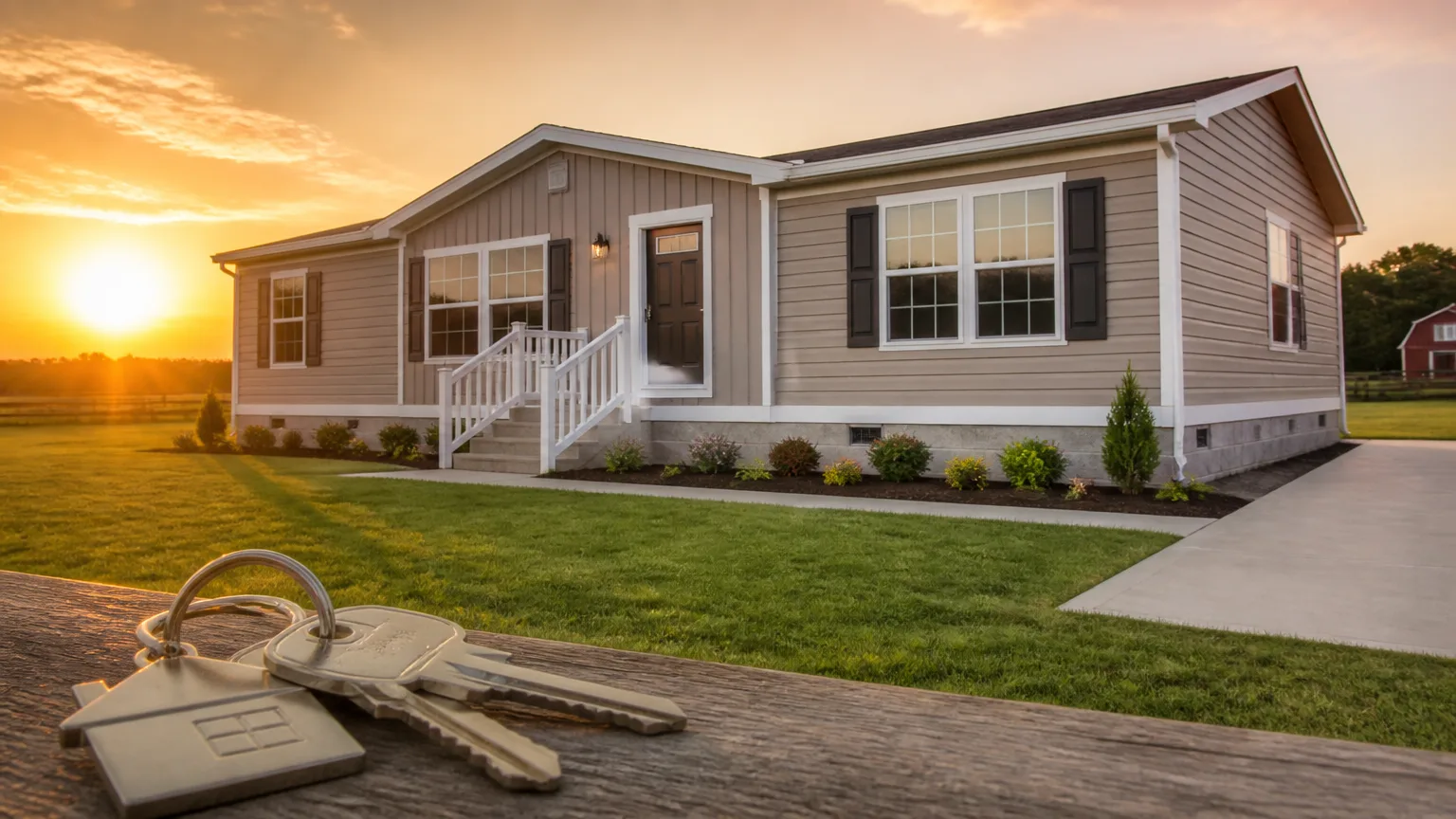
Learning how to finance a mobile home starts with one important distinction: how the home is legally classified. A manufactured home permanently attached to land may qualify as real property and use a mortgage. If you lease the lot or own the home separately, a chattel loan may be the more likely option.
That classification affects available loan programs, interest rates, down payments, and eligibility requirements. This guide explains how lenders evaluate manufactured homes, what upfront costs to expect, and which documents to gather before applying. Financing conditions also vary by state, lender, property type, and local market. Understanding how two housing markets can behave very differently provides useful context, because conventional housing trends do not always apply to manufactured homes.
Choose the Right Loan Type for the Home and Land
The best way to finance a mobile home depends on whether you own the land, lease it, and how the home is legally classified. A manufactured home permanently installed on an approved foundation may qualify for a conventional mortgage. It must typically meet HUD standards, pass an appraisal, and be titled as real property.
Government-backed programs offer additional routes. FHA loans may allow lower down payments but require approved property conditions, foundation certifications, appraisals, and primary-residence occupancy. VA loans generally require eligible military service, satisfactory credit and income, approved property standards, and owner occupancy. USDA financing may support eligible rural properties, subject to household-income, location, appraisal, and occupancy requirements.
If the home sits in a manufactured-home park or on leased land, a chattel loan may be more realistic. This loan finances the home as personal property rather than real estate. Chattel loans often have shorter terms, higher rates, and different consumer protections than mortgage loans, so compare the contract carefully.
Specialized manufactured-home lenders and seller or dealer financing can provide additional options. Review the annual percentage rate, fees, repayment term, and total interest—not only the monthly payment. Current rates and strong demand can affect availability and pricing, but broader mortgage-rate changes do not guarantee cheaper manufactured-home financing. Review how lower rates can bring more buyers into the market for useful market context.
Understand Eligibility: Credit, Income, Debt, and Property Rules
Lenders evaluate both your finances and the mobile home itself. Credit score and payment history often set the first threshold, but minimums vary by loan program. A stronger credit profile may secure better pricing, even when you meet minimum requirements.
Stable income and manageable debt also matter. Lenders typically verify employment, pay records, tax returns, or business financial statements for self-employed applicants. They calculate your debt-to-income ratio and may review cash reserves for closing costs, repairs, and several months of payments. If needed, explore ways a tax refund may help build a down payment. Down-payment requirements differ because government-backed, conventional, chattel, and personal-property loans carry different risks.
The property must also qualify. Many mortgage programs require HUD-code compliance, acceptable age and condition, installation records, and a permanent foundation. The home’s title status, appraisal support, and connections to utilities can affect eligibility. Zoning and local-ordinance compliance are equally important, particularly for older homes or relocated units.
Finally, determine whether you will own the land. Owning both the home and its site generally provides more mortgage choices. A leased-lot arrangement may require chattel financing and eliminate certain mortgage programs, even with excellent credit and income. Before applying, confirm the home’s title, foundation, land arrangement, and available documentation with the lender.
Budget for the Full Cost of Buying a Mobile Home
The advertised price is only one part of the transaction. Your upfront budget may need to cover the down payment, lender fees, appraisal, inspection, title and recording charges, insurance, taxes, and any land-lease deposit.
You may also pay for transportation, site preparation, setup, utility connections, and foundation work. Repairs, permits, or park-related fees can add substantial cash requirements. As a result, a lower-priced home may still require more money at closing than a higher-priced home that is already installed.
For a realistic affordability estimate, combine principal and interest with lot rent, property taxes, manufactured-home insurance, maintenance, utilities, and reserve savings. Ask the lender and seller for a written estimate of each cost before making an offer. This approach is central to understanding how to finance a mobile home without underestimating your monthly obligations.
Some sellers may offer seller concessions that may reduce upfront costs, such as contributions toward eligible closing expenses. However, lender and loan-program limits may restrict these funds. Confirm the permitted amount and approved uses before relying on any concession.
Compare Offers and Prepare a Strong Loan Application
Obtain quotes from a manufactured-housing lender, a bank or credit union, and, when relevant, a specialized chattel lender. Compare the interest rate, term, fees, down payment, collateral requirements, and total cost—not only the monthly payment.
Prepare identification, recent pay stubs, tax returns, bank statements, debt information, the purchase contract, title or deed records, land lease, installation documentation, an insurance quote, and property disclosures. Seek preapproval before making an offer, and confirm the lender has reviewed the specific home, foundation, title, and land arrangement.
During underwriting, avoid new credit accounts and large unexplained deposits. Sellers and agents can prevent delays by providing complete disclosures, title records, installation certificates, lease terms, and appraisal access promptly. They should also confirm concession limits before including seller-paid costs.
Move-up buyers may improve financing by using home equity to buy the next property. However, equity strategies still involve valuation, repayment, and timing risks.
A Mobile-Home Loan Should Fit Both the Buyer and the Property
The best way to finance a mobile home depends on land ownership, real-property eligibility, your financial profile, and total ownership costs. Compare multiple written loan estimates, confirm program rules with qualified lenders, and obtain a professional inspection before closing.
Financing is only one part of affordability. Preserve emergency savings and budget for repairs, lot-rent increases, taxes, and insurance before choosing a loan.
Leave a Reply