
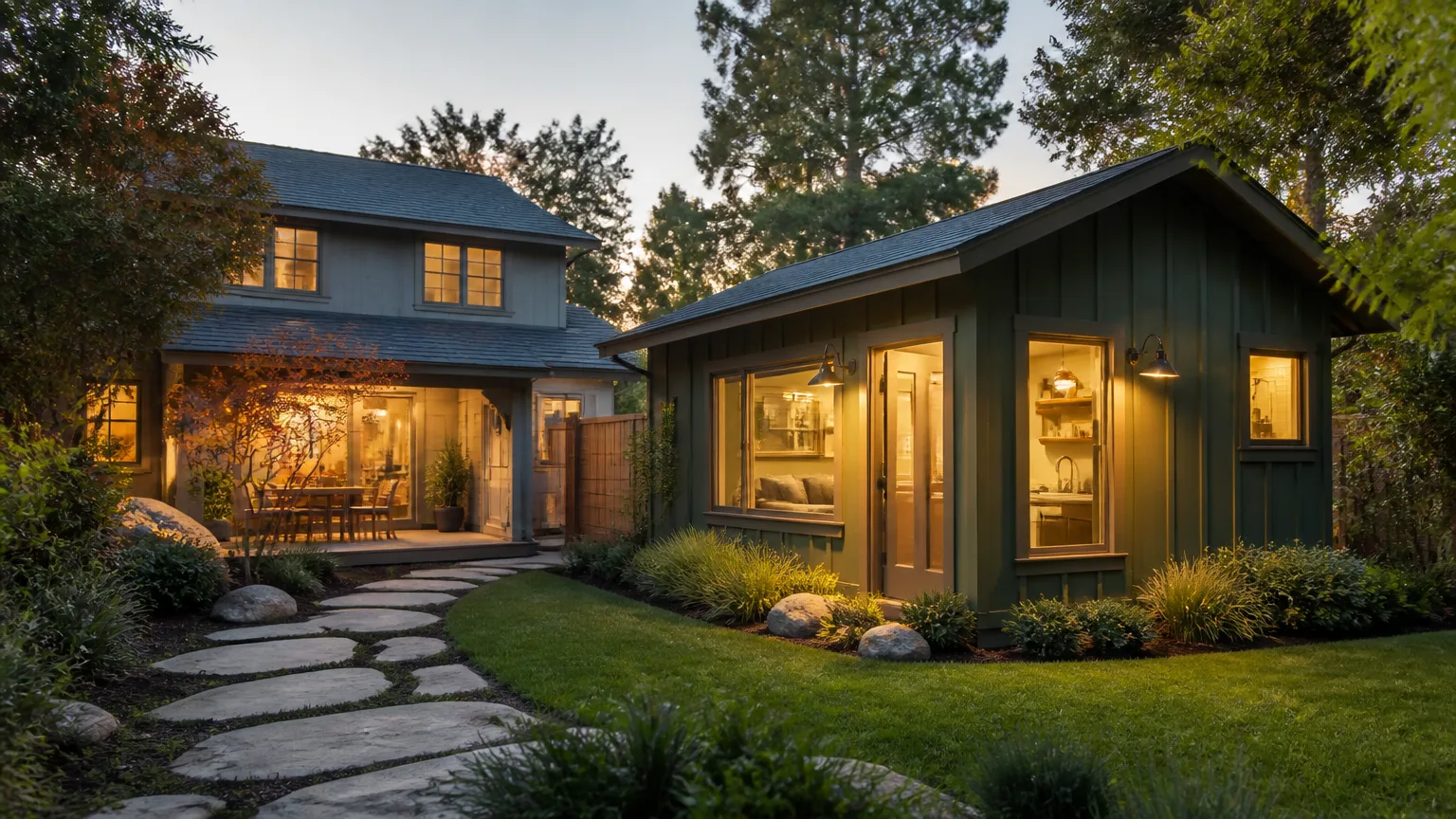
If you are asking what is adu in real estate, it is a separate, smaller home on the same lot as a primary residence. An accessory dwelling unit typically includes its own entrance, kitchen, bathroom, and sleeping area. It may serve as a guest suite, home for family members, long-term rental, or flexible workspace.
For homeowners, buyers, and sellers, accessory dwelling units can create useful opportunities—but they require careful due diligence. This article explains how ADUs are used, what construction and financing may cost, and which rules can affect a project. Requirements vary widely because local governments control zoning, building codes, rental regulations, and many financing considerations. An ADU may support a property’s utility and appeal, but it does not automatically increase value.
What Counts as an ADU—and How Homeowners Use One
An accessory dwelling unit (ADU) is a separate living space on the same property as a primary home. It typically includes its own entrance, kitchen, bathroom, sleeping area, and living space. A guest room without independent cooking and bathroom facilities usually does not qualify.
Common physical types include:
- Detached backyard cottages
- Attached additions with a separate entrance
- Converted garages or basements
- Interior units created within the main home
Homeowners use ADUs to support aging parents, adult children, caregivers, and extended-stay guests. They may also provide long-term rental income or, where local rules permit, operate as short-term rentals. These options can help families address housing needs in retirement while balancing privacy, proximity, and household costs.
An ADU can also respond to broader affordability pressures. It may create housing without purchasing another property, but it reduces available yard space and may affect parking, privacy, and utility capacity. Some jurisdictions require separate meters, additional parking, or owner occupancy of the primary residence.
Before renting or marketing a space as an ADU, confirm that local authorities recognize it legally. Zoning approval, permits, inspections, and a certificate of occupancy may apply. Not every lot can accommodate an ADU because of setbacks, lot size, access, septic limitations, or neighborhood restrictions.
ADU Costs: Construction, Design, and Ongoing Expenses
ADU costs vary significantly, so a single price estimate can mislead. Begin with feasibility work, including site planning, zoning review, soil or septic analysis, and utility-capacity checks. Architectural and engineering services, permit fees, and required compliance upgrades can add substantially before construction begins.
Construction expenses typically include utility connections, site preparation, the foundation, framing, plumbing, electrical, HVAC, insulation, finishes, appliances, and landscaping. Costs depend on regional labor rates, square footage, project type, site access, and foundation requirements. A detached unit may require more excavation and utility work than a garage conversion. Prefabricated construction can reduce labor time, while custom-built designs may better suit challenging lots but cost more.
Financing also affects the project’s true cost. Borrowers should account for loan interest and confirm affordability through mortgage pre-approval, rather than relying on projected rent. Ownership expenses may include:
- Insurance, property taxes, maintenance, vacancy, property management, and future repairs.
Evaluate the complete investment against realistic rental income, the personal value of housing family members or creating a home office, and potential resale benefits. Gross rent alone does not establish whether an ADU is financially worthwhile. These calculations are especially important when assessing what is an ADU in real estate and whether the project suits the property.
Key ADU Rules: Zoning, Permits, and Legal Compliance
Before evaluating what is an ADU in real estate, confirm whether the property can legally support one. Local zoning rules may limit minimum and maximum size, setbacks, height, lot coverage, parking, exterior design, entrances, and occupancy. Some jurisdictions also require owner-occupancy, separate utility connections, or specific access for emergency services.
Zoning approval determines whether the use and structure are allowed on the lot. Building permits address construction, while inspections confirm compliance with applicable codes. A certificate of occupancy may be required before anyone can live in the unit. Separate rental licenses may apply, and short-term rentals can face additional bans, registration requirements, or operating limits.
State-level ADU trends do not replace local verification. Buyers and sellers should contact the city or county and review approved plans, permit records, inspection results, tax records, insurance coverage, and seller disclosures. This diligence matters when comparing ADUs with other housing options for first-time buyers.
An unpermitted unit can create financing, appraisal, insurance, resale, and safety problems, even when it appears professionally built. Do not rely on rental income or added value until its legal status, occupancy authorization, and rental permissions are documented.
How ADUs Affect Buying, Selling, and Property Value
An ADU can increase rental income, support multigenerational living, and improve resale appeal. However, buyers should confirm its legality, condition, utility arrangements, leases, insurance coverage, and financing eligibility. They should also ask whether the appraisal recognizes the unit as additional living area or accessory space.
Sellers can improve marketability with permits, accurate records, documented improvements, strong photography, clear disclosures, and realistic rent history. These materials help buyers and appraisers evaluate what an ADU in real estate contributes.
Value remains market-specific. An ADU may attract strong demand where housing is limited, but it may not recover its full construction cost. Reduced yard space, privacy concerns, maintenance, tenant management, and neighborhood restrictions can offset benefits.
The Bottom Line on ADUs in Real Estate
An ADU can provide flexible living space and potential rental income, but success depends on local approval, sound budgeting, and clear goals. Evaluate the property, regulations, complete project cost, intended use, and resale implications together. For additional guidance, visit Christopher Garguilo’s Blog.
Before building or buying, consult the planning or building department, qualified contractors, lenders, insurers, and real estate professionals. A legally documented, financially workable ADU can add meaningful utility; one that only appears to add value may create costly problems.
Leave a Reply