
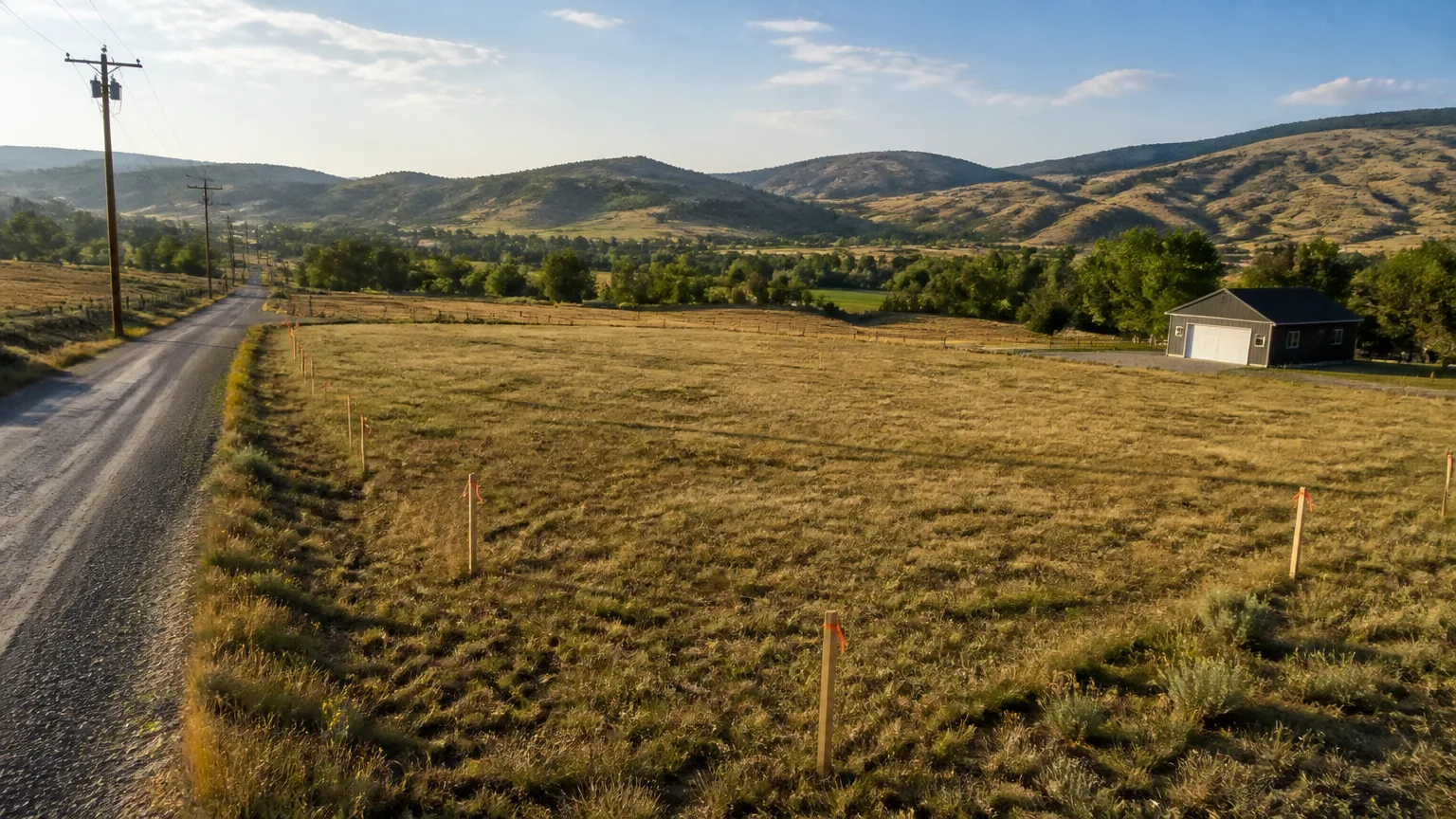
Property loans for land work differently from mortgages for existing homes. Vacant parcels offer no finished residence as collateral, so lenders often consider them riskier. That can mean stricter qualification requirements, larger down payments, or higher rates.
The right financing depends on your plans. Building soon, holding land for future use, and buying acreage for recreation can lead to different loan choices and repayment terms. Parcel access, utilities, and zoning may also affect eligibility. As you consider how buyers think about timing a real estate purchase, compare offers carefully: rates and terms vary by lender and market. This guide explains what to weigh when choosing financing for your goals.
The Main Land Financing Options
The right financing depends on the parcel’s infrastructure and your plans. Raw-land loans cover undeveloped parcels without roads or utilities, but lenders may require larger down payments and charge higher rates. Unimproved-land loans generally suit parcels with some access or nearby services, though they may still lack essential infrastructure.
Improved-land loans apply to parcels with road access and utilities, making them more attractive to lenders. Still, verify that connections are available at the property line and confirm zoning, access rights, and development costs before applying. Property loans for land vary by lender, borrower finances, and parcel characteristics.
Other routes may fit specific buyers. Seller financing can offer flexible terms, but review the contract and confirm the seller holds clear title. A home equity loan or HELOC may provide funds if you have sufficient equity, though your home secures the debt. Availability and terms depend on your finances, the property, and the lender.
If you plan to build soon, construction-to-permanent financing may combine land purchase and construction into one loan, subject to lender requirements. A land loan alone does not pay for construction; it finances the parcel. For a broader look at financing considerations for a newly built home, consider how the build timeline and budget affect your financing path.
Rates, Down Payments, and Loan Terms: What to Compare
Land-loan rates are commonly higher than standard mortgage rates because lenders face greater repayment risk. Pricing can depend on the parcel’s development, location, your credit, the loan-to-value ratio, and the lender’s assessment of resale potential. Compare each offer in context rather than assuming one rate applies to all property loans for land.
Down payment requirements also vary. A larger down payment may reduce borrowing costs, but it increases the cash needed upfront. Review what buyers should know about down payments as part of your financing research, then ask lenders how their minimums vary by parcel type and borrower profile.
Compare fixed and variable rates, the loan term, and the amortization schedule. The term is the period before the loan comes due; amortization determines how payments reduce the balance over time. A loan may have a shorter term than its amortization period, leaving a balloon payment at maturity. Check fees and prepayment rules, including whether paying early triggers a charge.
Request written loan estimates or proposals with the same purchase price and down payment assumptions. Calculate cash needed at closing, monthly payments, and the balance due at payoff. This full-cost comparison can reveal when a lower rate comes with less manageable terms.
How to Qualify—and What Lenders Examine
Lenders assess your finances and the parcel’s suitability before approving property loans for land. They may review your credit history, verified income, debt-to-income ratio, and cash reserves. A larger down payment can strengthen an application, while a clear explanation of your intended use—such as building a home or holding the land—helps lenders assess risk. For practical steps on preparing your finances before buying property, organize your income and debt records early.
The lender will typically order an appraisal and examine whether the parcel can support your plans. Review may cover zoning, legal road access, survey boundaries, utilities, title issues, environmental concerns, and buildability. Confirm local requirements with the relevant authorities before closing; an appraisal alone does not establish that a planned use is permitted.
Documentation and underwriting standards vary by lender and property type. Ask early about minimum acreage and acceptable parcels, such as raw or improved land. If financing is tied to a construction project, confirm the construction deadline and any required plans or permits. These checks can reveal constraints before you commit to a purchase or incur closing costs.
Match the Loan to Your Plan for the Parcel
Your timeline and intended use can determine which property loans for land fit. If you plan to build soon, a lender may require approved plans, permits, or a construction deadline. A long-term hold may call for a land loan with payments you can sustain while the parcel remains undeveloped. Recreational or agricultural use may face different eligibility rules and loan structures.
Test affordability against realistic timelines, not just the purchase price. Include property taxes, insurance, site work, utility connections, and loan payments due before construction begins. Also assess how your down payment affects available cash and monthly costs; how down payment choices affect a home purchase can help frame that decision.
Home equity may offer different pricing, but borrowing against it puts your existing home at risk if you cannot repay. Seller financing can provide flexibility, yet review the payment schedule, default terms, and title protections carefully before signing. Choose terms that match your plan and the risks you can manage.
Choose Financing with the Full Cost in View
Choose property loans for land based on the parcel’s condition and intended use, not just the advertised rate. Compare loan structure, total borrowing costs, repayment terms, and how ready the land is for your plans.
Request written proposals from lenders experienced with land loans, using consistent price and down payment assumptions. Before committing, verify access, utilities, zoning, and development requirements. For broader real estate guidance, explore this blog’s other resources; they can help you understand key considerations but do not provide loan quotes or financial advice.
Leave a Reply