
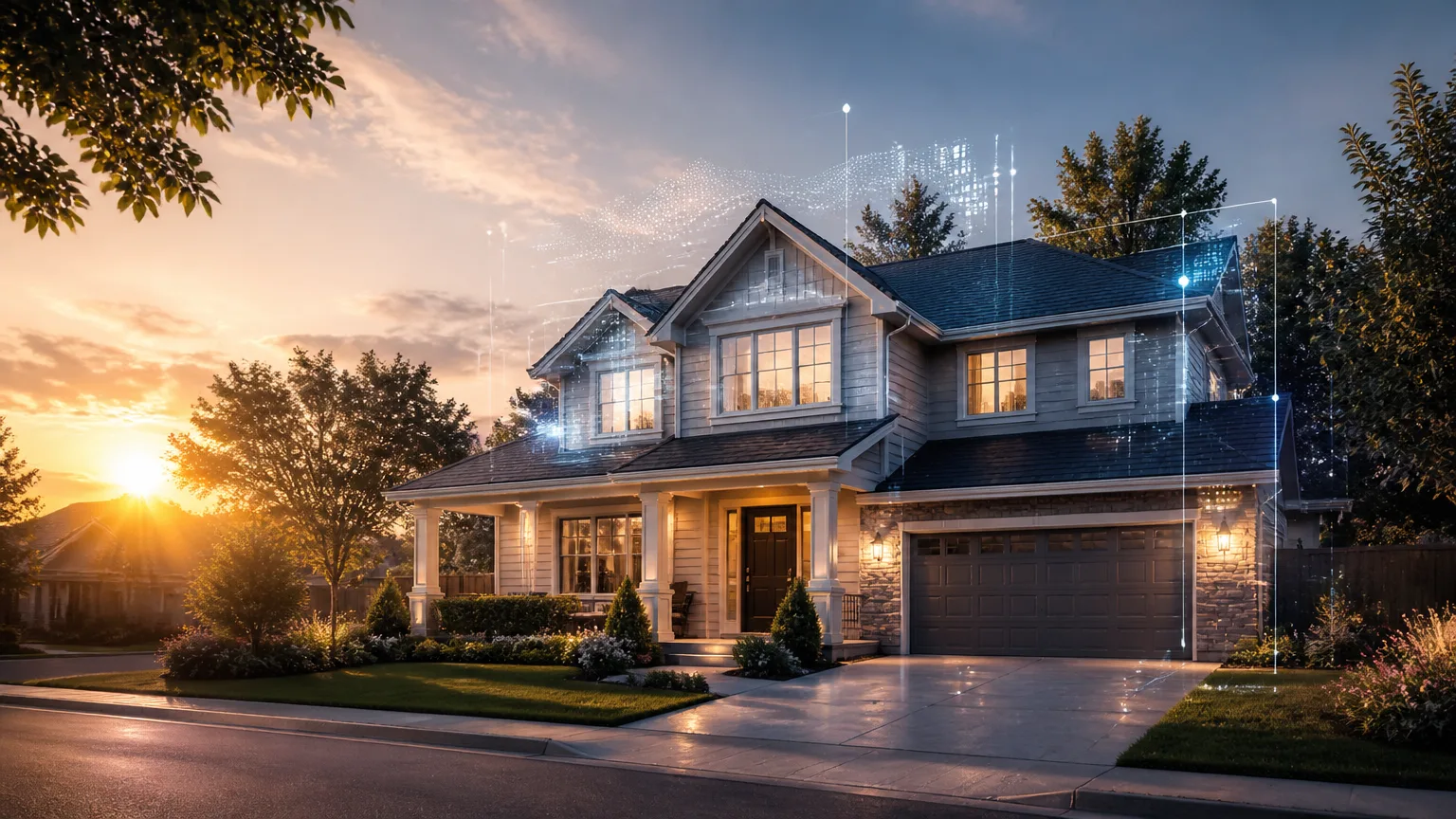
When buyers and sellers ask, “how does Zillow determine home values?” they are usually looking for a quick benchmark. Zillow’s Zestimate is an automated valuation model (AVM) that estimates a home’s market value using available data—not an in-person inspection or an agent’s individual opinion.
That number can shape expectations, but it is not an appraisal or a guaranteed sale price. An asking price, appraisal, and final sale price may differ because each reflects different information and circumstances. Understanding the Zestimate’s main inputs can help you use it wisely and avoid common homebuyer mistakes.
The Data and Algorithms Behind a Zestimate
To understand how does Zillow determine home values, it helps to know that a Zestimate is produced by an automated valuation model, or AVM. An AVM uses statistical methods to identify patterns across many data points; it does not involve a person physically evaluating each home.
Depending on the property and market, the model may draw on public records, tax assessments, listing details, and past transactions. These sources can help estimate how features such as a home’s size, location, and sale history relate to prices for similar properties. Data availability and accuracy vary by location, so an input that is current in one county may be incomplete or outdated in another.
Zillow does not publish every model input, and no single source is equally complete across all states and counties. The model may use different methods and available data depending on the home and local market. For example, a recently sold home may have more transaction evidence than one in an area with few sales. Local conditions also matter; how broader market conditions can affect housing can help explain why estimates shift as markets change.
Property Features and Comparable Homes Matter
A Zestimate reflects the property details available to Zillow, including location, property type, bedrooms, bathrooms, square footage, lot size, and recorded improvements. If public records list the wrong bedroom count or omit an addition, the estimate may not reflect the home buyers actually see.
Recent sales of comparable nearby homes provide important context. However, two houses with similar square footage may differ substantially in condition, layout, age, or amenities. Those differences can make a comparable sale a poor match and pull an estimate away from a home’s likely market appeal.
Automated models may also struggle to account for renovations, deferred maintenance, views, noise, or interior quality when those factors are not reflected in available data. A remodeled kitchen might attract buyers, while a nearby road or needed repairs could reduce interest. Neither may be captured accurately in the records.
Owners can review property details for errors and update eligible information. Documented improvements and preparing a home for sale can help clarify what makes a home distinctive, though updates do not guarantee a particular estimate. When considering how does Zillow determine home values, remember that the model depends on both recorded features and the quality of comparable sales.
Local Market Conditions Can Move the Estimate
A Zestimate can reflect both nearby home sales and broader local trends. Recent sales of similar homes give the model useful comparison points, while inventory and buyer demand help shape the market context. When homes sell quickly and prices rise, estimates may adjust upward; when listings sit longer, downward pressure may follow.
The reliability of those signals varies by location. A stable neighborhood with many recent sales of similar homes generally provides stronger comparison data than a rural area with few transactions or homes that differ widely. In a rapidly changing market, even recent sales may not capture a sudden shift immediately, so an estimate can lag behind current conditions.
Homeowners deciding whether to sell can affect how many homes become available, though no single factor determines value. Trends in what is motivating homeowners to move can offer context for changes in local supply and activity. Understanding how does Zillow determine home values also means recognizing that estimates depend on how quickly reliable market data becomes available.
Why a Zestimate Can Differ From a Home’s Sale Price
A Zestimate is an automated estimate, not a promise of what a home will sell for. It relies on available records and comparable sales, which may not capture details that shape a buyer’s judgment. For example, public data may miss an unrecorded kitchen upgrade, a changed layout, needed repairs, or other features that affect the home’s appeal.
Accuracy can also vary by location and timing. Estimates may be less reliable where sales are limited, comparable properties are scarce, or prices are changing quickly. If Zillow displays an accuracy range or confidence information, review it alongside the estimate; a wider range signals greater uncertainty. People following questions about home prices and market conditions should keep in mind that market shifts can outpace recorded data.
A Zestimate is not the same as a professional appraisal, which evaluates a specific property for a defined purpose, or a comparative market analysis prepared by a real estate professional using current local knowledge. A sale price reflects negotiations, timing, financing, and the priorities of individual buyers. Treat the estimate as a starting point, then compare it with current local evidence and the home’s actual condition.
Use the Zestimate as One Piece of the Valuation Picture
A Zestimate combines property records, comparable sales, and local market signals to estimate a home’s value. Its accuracy can be limited by incomplete data and features that are difficult to measure, such as condition, layout, or recent renovations.
Use the figure as an online reference, then compare it with current sales and market conditions in the area. When a consequential decision requires a more tailored value, seek an appraisal or a qualified real estate professional’s analysis. The Zestimate can inform your understanding of a home’s value, but it is not a decision-ready valuation.
Leave a Reply